Xero Bookkeeping Services: Handling Your Small Business'S Financial Records Is Important For Its Success
Selecting The Right Bookkeeping System
Browsing the maze of accounting systems can feel like a daunting quest, especially for the budding business owner. It's not practically crunching numbers; it has to do with finding a rhythm that resonates with your company's special heartbeat. Think of it in this manner: would a master chef utilize a blunt butter knife to julienne vegetables? Obviously not! Likewise, your accounting system requires to be the sharpest tool in your monetary arsenal.
Handbook vs. Digital: The Age-Old Dispute
For some, the soothing rustle of paper journals and the methodical click of a pen offer a sense of control. This traditional method, typically involving spreadsheets or perhaps physical journals, can be exceptionally instinctive for those with very low deal volumes. It's comparable to tending a little garden by hand-- every plant gets specific attention. As your organization blooms, the sheer volume of invoices, invoices, and payments can quickly transform that tranquil garden into a thick jungle. Mistakes increase, reconciliation ends up being a Herculean task, and suddenly, your precious time is swallowed by administrative quicksand. Is this truly the best usage of a small company owner's day?
The Digital Leap: Cloud-Based Solutions
The digital age has actually introduced a myriad of cloud-based accounting services, transforming how small companies manage their financial resources. These platforms provide exceptional convenience, enabling you to access your monetary data from virtually anywhere, at any time. It resembles having a monetary assistant living in your pocket, constantly prepared to update ledgers or create reports. This availability is a game-changer for entrepreneurs who are continuously on the move, juggling numerous responsibilities. Furthermore, these systems typically automate tiresome tasks, from classifying costs to reconciling bank accounts, significantly decreasing the potential for human mistake. Imagine the assurance understanding your books are constantly current, prepared for tax season or an impromptu monetary review.
When thinking about a digital service, ponder the following:
- What is your convenience level with technology?
- How lots of transactions do you process regular monthly?
- Do you require to integrate with other business tools, such as point-of-sale systems or payroll software application?
- What level of financial reporting do you require?
- How essential is automated invoicing and expense tracking?
Scalability and Assistance
A vital, yet frequently neglected, element of selecting a bookkeeping system is its scalability. What works for a solo endeavor today may buckle under the weight of a growing business tomorrow. Your selected system should be able to develop with your service, accommodating increased transaction volumes, additional users, and more complex monetary requirements. Believe long-lasting. Will this system still serve you well when your business utilizes five individuals, or fifty? Think about the schedule of customer assistance. When you come across a snag, having easily accessible help can be a lifesaver, changing minutes of aggravation into speedy resolutions. Keep in mind, the right accounting for small company system is not just a tool; it's a tactical partner in your journey to monetary clearness and continual development. It must simplify, not complicate, your financial life.
Recording Financial Transactions Precisely
The bedrock of any growing small organization? Impressive record-keeping. Believe of your monetary transactions as the heartbeat of your business; if it avoids a beat, or even worse, flatlines, you remain in for a rough ride. Many entrepreneurs, frequently overflowing with passion for their product and services, find themselves adrift in a sea of invoices and billings. Ever heard the one about the shoebox filled with crumpled papers? It's not just a cliché, it's a typical truth for numerous fledgling businesses, resulting in a scramble when tax season looms or when seeking funding. What good is a dazzling concept if its financial foundations are unstable?

The Peril of Unreconciled Accounts
One of the most considerable hurdles small organizations encounter is the chasm in between their bank statements and their internal records. This discrepancy, frequently subtle at initially, can grow out of control into a significant job, obscuring the true monetary health of the organization. Imagine attempting to navigate a thick fog-- that's what unreconciled accounts feel like. Forgetting to log a small, recurring membership, or miscategorizing a big purchase, can shake off your whole system. The causal sequence extends beyond mere trouble, impacting whatever from capital projections to accurate revenue and loss declarations. Do you really understand where every dollar goes, or where it originates from?
To prevent this typical mistake, consider these expert insights:
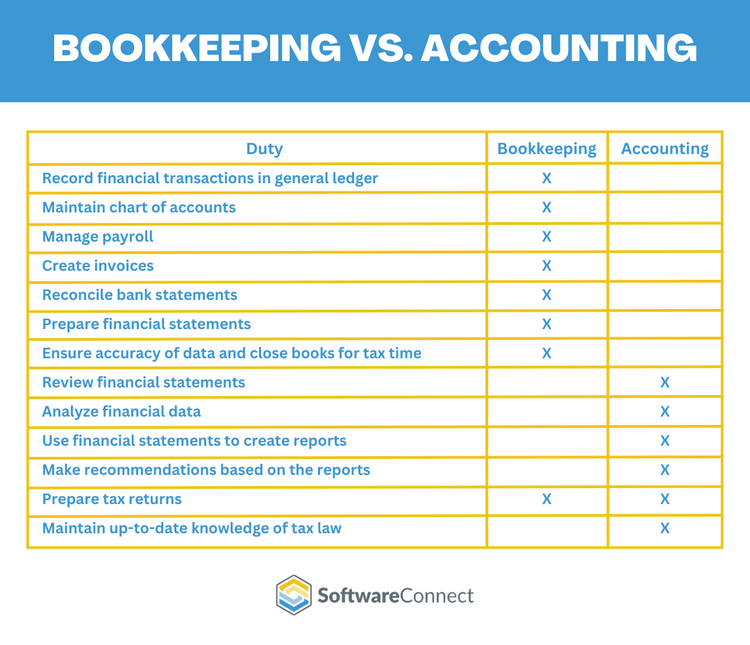
- Daily Discipline: Make it a non-negotiable routine to log deals daily, or at the minimum, every other day. This isn't about being obsessive; it has to do with avoiding a mountain from forming out of molehills.
- Classification is King: Establish a consistent, clear chart of accounts from the outset. This frequently neglected action is vital. Are those office provides an administrative expenditure or a marketing expense? Clearness here conserves enormous headaches later on.
- Digital Tool Utilization: While a spreadsheet might be enough for the really smallest operations, investing in dedicated bookkeeping software application can be a game-changer. These platforms automate much of the data entry and reconciliation, significantly minimizing human mistake. Consider it as having a determined assistant devoted entirely to your finances.
- Routine Reconciliation: Do not wait until month-end. Reconcile your bank and charge card declarations with your internal records weekly. This proactive approach allows you to capture mistakes or inconsistencies while they are still little and quickly rectifiable. A fast check now saves hours of investigator work later.
Understanding the subtleties of financial transaction recording isn't just about compliance; it's about empowerment. It offers you the clarity to make informed choices, determine costs trends, and determine areas for growth or expense reduction. Without precise information, your company choices are, at best, educated guesses. With it, you have an effective compass directing you through the often-turbulent waters of entrepreneurship. Remember, every cent narrates; ensure yours is a true and accurate narrative.
Handling Payroll and Costs: The Silent Earnings Drain
Ever seem like you're constantly chasing invoices, playing investigator with bank declarations, and questioning where all your hard-earned cash disappears? For numerous small company owners, the apparently straightforward task of managing payroll and expenditures ends up being a bewildering maze, a quiet revenue drain that siphons away precious resources. This isn't simply about balancing books; it has to do with securing your monetary health. Think about it like a dripping faucet: separately, each drip seems unimportant, however with time, it clears the entire tank. The most significant hurdle often isn't the complex computations, but the large volume and differed nature of deals, making it remarkably simple for things to slip through the cracks. Are you thoroughly tracking each and every single business cost, or are some falling by the wayside, costing you prospective tax deductions?
One common mistake is the commingling of individual and service funds. It's a practice numerous new business owners fall under, a blurred line that makes accurate expenditure tracking an absolute nightmare. Envision attempting to explain to an auditor why your grocery bill from last Tuesday is linked with your workplace supply purchases. This seemingly harmless practice can lead to substantial headaches down the line, not simply with tax authorities however also in comprehending your real success. How can you gauge the health of your service if you do not have a clear photo of its financial inputs and outputs? Separate savings account and charge card are non-negotiable. This isn't just an idea; it's basic to sound bookkeeping for small company. Consider the often-overlooked location of staff member expense repayments. Without a robust system, these can quickly become a source of aggravation and inaccuracies. Do your employees understand the appropriate procedure for submitting costs? Is there a clear approval process in place?
Improving Your Cost & & Payroll Processes
The option lies in effective systems and a proactive frame of mind. For payroll, consider the advantages of direct deposit over paper checks; it minimizes administrative concern and supplies a clear audit trail. In addition, ensure you comprehend the nuances of classifying employees versus independent professionals; misclassification can lead to large charges. For expenditures, the power of digital tools can not be overstated. Ditch the shoebox complete of crumpled invoices! Mobile apps designed for expenditure tracking allow you to snap an image of an invoice, classify it, and even connect it to a specific task or client, all in real-time. This not just saves you time but likewise ensures precision and makes year-end tax preparation significantly less complicated. What's more, carrying out a clear expense policy for your group, outlining what is reimbursable and what isn't, can avoid disagreements and misunderstandings before they even arise. A well-defined policy functions as a compass, directing everyone towards certified and efficient spending.
- Utilize dedicated company savings account and credit cards.
- Implement digital expense tracking software for real-time capture.
- Automate payroll processes to minimize errors and save time.
- Develop a clear, written cost compensation policy for employees.
- Regularly fix up bank statements with your accounting records.
Keep in mind the adage, "What gets measured gets managed." Without precise expense tracking and meticulous payroll management, you're essentially flying blind. You will not really know your revenue margins, nor will you be able to make informed decisions about development or cost-cutting. This isn't almost compliance; it's about tactical financial insight. Are you genuinely optimizing your reductions? Are there investing patterns you're uninformed of that could be optimized? The time invested in setting up robust systems for handling payroll and costs will pay dividends, freeing you to concentrate on what you do best: growing your service.
Generating Financial Reports: The Unsung Hero of Small Business Accounting
Ever felt like you're navigating a dense fog, trying to make essential company decisions without a clear view? That's exactly what occurs when you disregard the power of well-generated monetary reports. Numerous little company owners, naturally overloaded with day-to-day operations, view these reports as simple compliance documents. What if I informed you they are, in truth, your most powerful compass?
The Genuine Difficulty: Disorganized Data
The primary stumbling block for most isn't the act of generating the report itself, however the disorderly, scattered information that precedes it. Envision trying to bake a cake with ingredients strewn across the cooking area, some missing, others expired. That's the reality for many who haven't welcomed careful accounting from the first day. Deals are logged haphazardly, invoices go missing, and bank reconciliations become Herculean jobs. This disarray undoubtedly drips down, making the creation of precise financial statements an aggravating, error-prone endeavor. How can you really understand your service's health if the very information you're relying on is flawed?
- Revenue and Loss Statement (P&L): This isn't practically what you made and invested. It tells a story. Is your gross profit margin shrinking? Are business expenses spiraling out of control? An eager eye on your P&L can expose if your pricing technique is effective or if you're spending beyond your means on marketing that isn't yielding returns.
- Balance Sheet: A picture of your financial position at a particular moment. It information your possessions, liabilities, and equity. Consider it as your service's net worth. Are your accounts receivable growing too big, indicating collection problems? Is your debt manageable? This report supplies critical insights into your liquidity and solvency.
- Money Circulation Declaration: Often overlooked, yet perhaps the most vital. A successful business can still go under if it lacks money. This report tracks cash can be found in and going out, revealing if you have enough liquid funds to cover your responsibilities. It answers the sixty-four-thousand-dollar question: where did the money go?
Professional Tips for Flawless Reporting
To produce significant financial reports, cultivate a practice of everyday or weekly information entry. Do not let deals pile up; it resembles trying to bail out a sinking ship with a thimble. Reconcile your savings account and credit cards consistently. This isn't almost capturing errors; it's about guaranteeing every penny is represented, providing the pristine data required for precise reporting. Think about carrying out cloud-based accounting software. These platforms automate much of the information entry and reconciliation, drastically decreasing manual errors and conserving important time. They also use customizable report templates, making the generation process practically simple and easy. Keep in mind, the clearer your information, the sharper your insights. What story do your numbers outline your organization's future?